
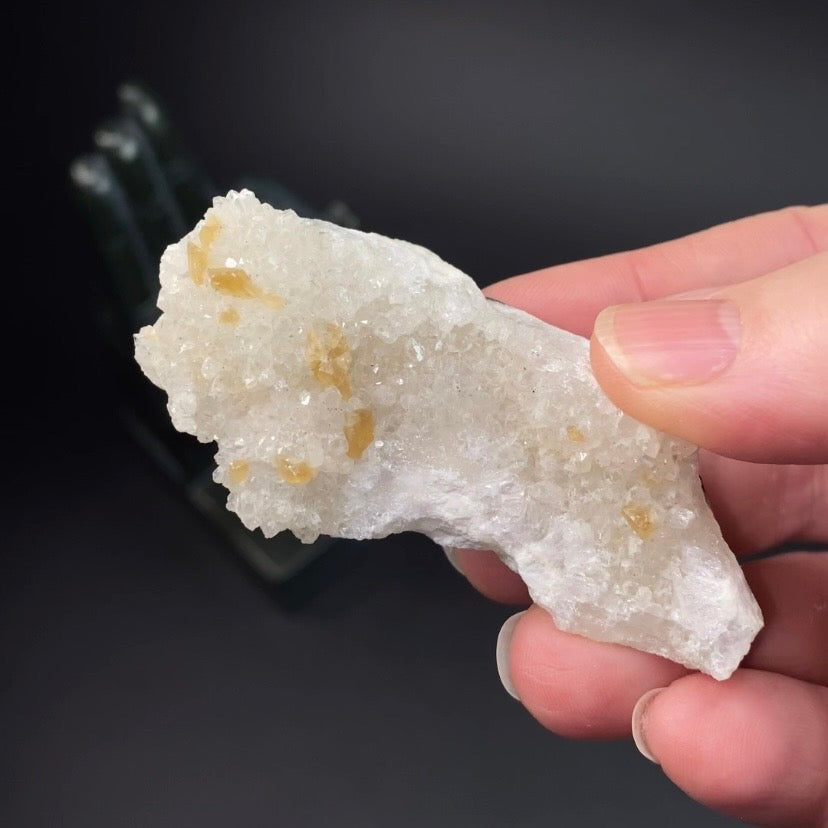


Description
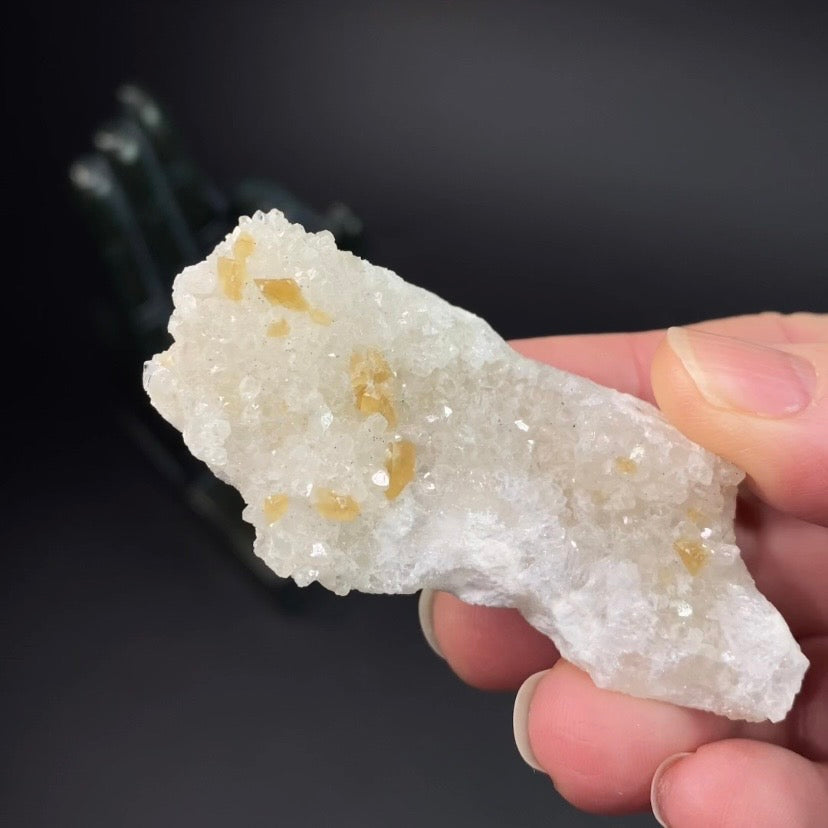
Fluorescent and phosphorescent Honey Yellow Calcite on druzy quartz, with a classic zeolite assemblage in a celadonite-lined basalt vesicle.
This specimen is a classic example of secondary mineralization from the basalt cavities of the Deccan Traps in western India, an area world-renowned for producing aesthetic calcite, quartz, and zeolite combinations.
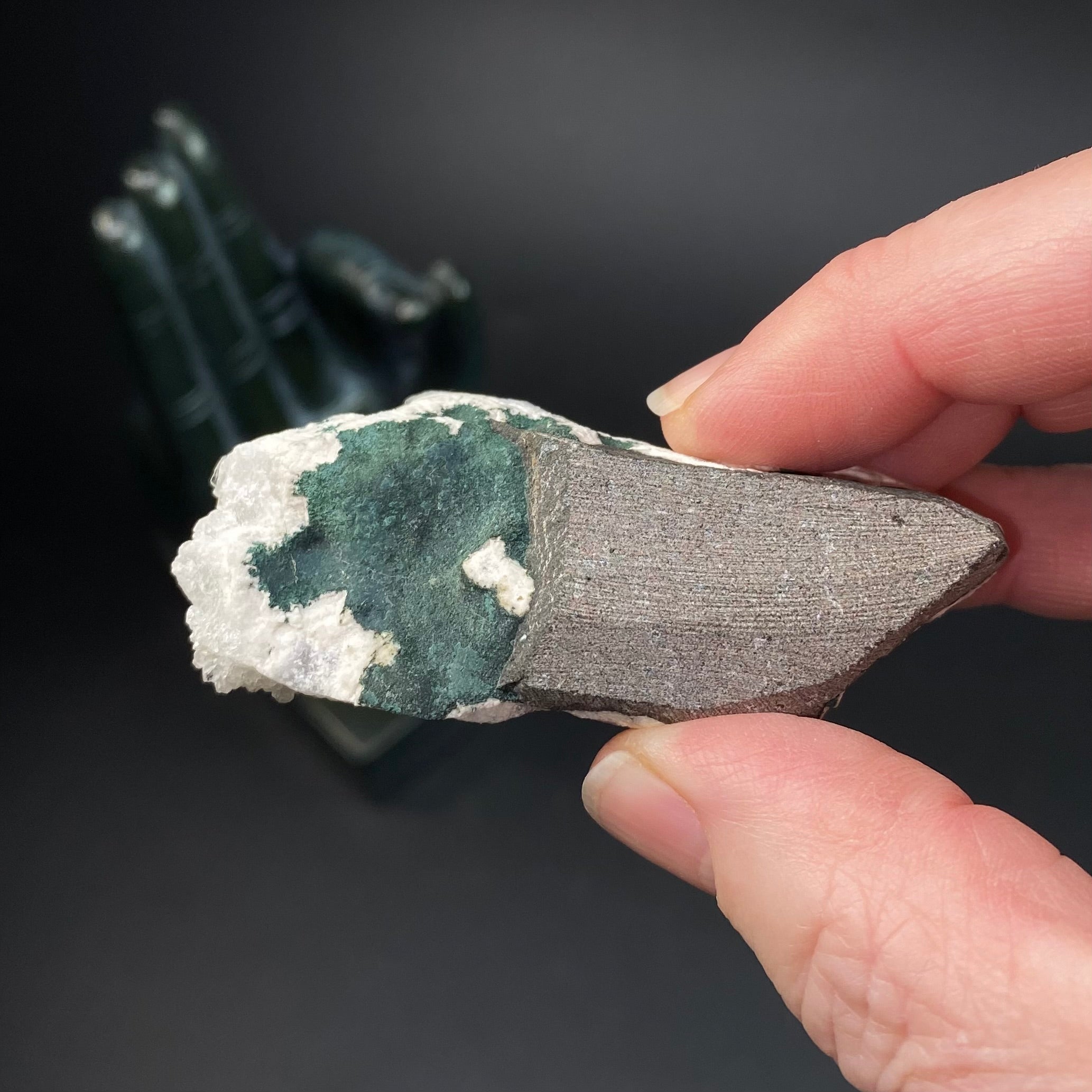
The piece displays a cross-section through a mineralized gas vesicle (lava “bubble”). It is cut and ground into the traditional Jalgaon display form—flat-bottom and self-standing—so the pocket is presented face-forward. This style of display reveals the vesicle wall, the interior mineral linings, and—most importantly—the complete sequence of mineral growth preserved within a single cavity.
The basalt cavity wall is lined with a thin green layer of celadonite (not exposed in all areas). The next layer is a white fibrous zeolite mass, likely mordenite/mesolite, overlain by quartz druse and later honey-colored calcite crystals. The honey calcite occurs in attractive bladed to wedge-shaped crystals with warm amber tones from trace iron.
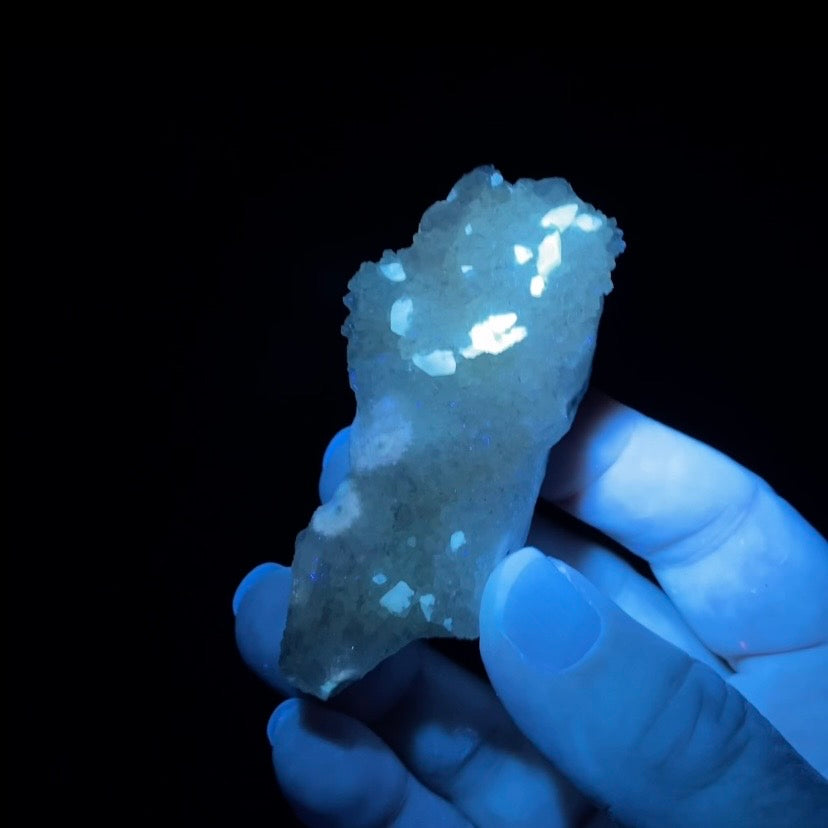
UV Fluorescence
The calcite displays notable luminescent properties:
Longwave UV (365 nm):
Strong, cyan to aqua fluorescence across the calcite crystals.
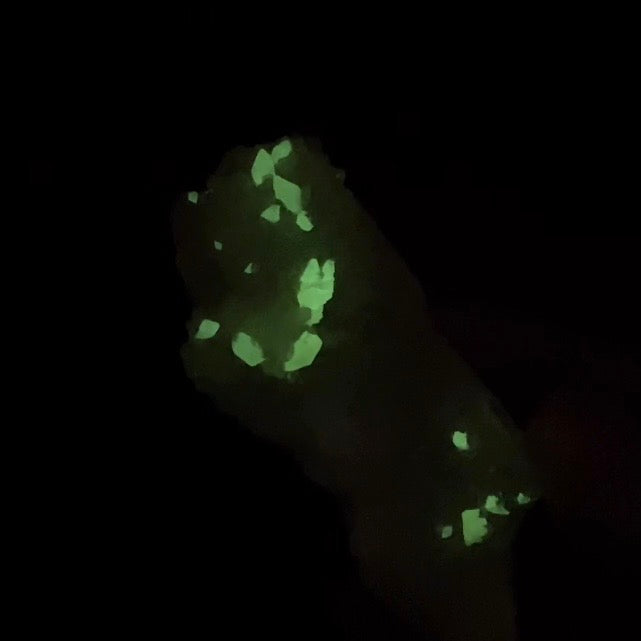
Phosphorescence:
A faint greenish afterglow is visible after UV exposure, somewhat more pronounced following shortwave illumination.
That color mix — cyan fluorescence with greener afterglow - is consistent with Mn-activated calcite with minor secondary activators and
trace Pb or rare earth elements (not uncommon in Deccan Trap cavity calcites)
Size: 67 x 31 x 19 mm. 40 grams.
Jalgaon District, Maharashtra, India (Deccan Traps).