


Description
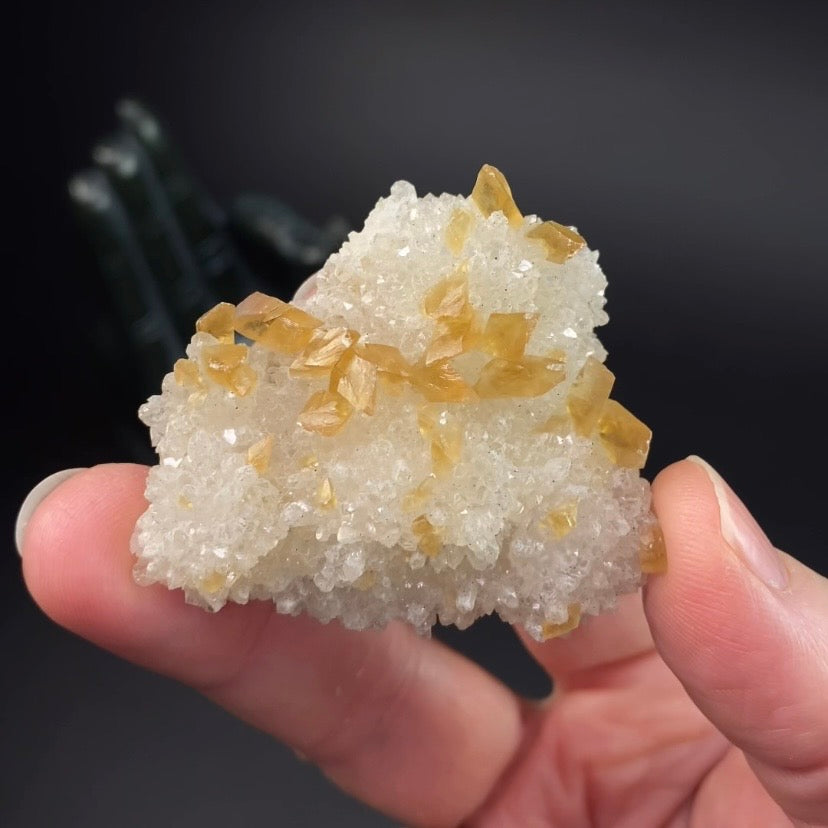
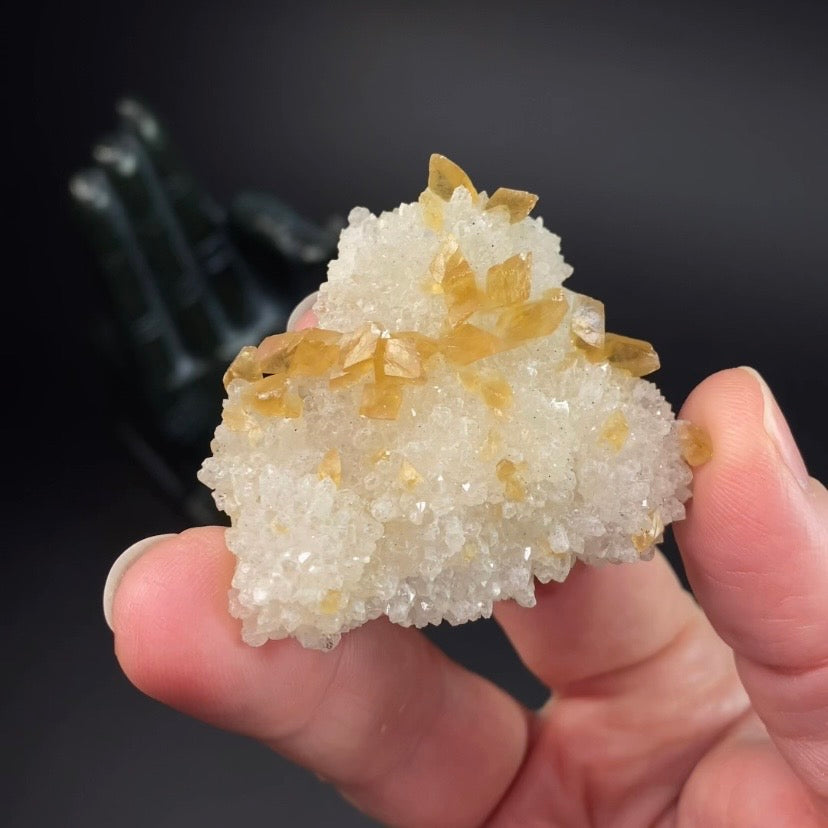
Fluorescent Honey Yellow Calcite on druzy quartz, with a Celadonite and basalt matrix remnant on the base of the cluster.
This specimen is a classic example of secondary mineralization from the basalt cavities of the Deccan Traps in western India, an area world-renowned for producing aesthetic calcite, quartz, and zeolites.
The honey calcite occurs in attractive bladed to wedge-shaped crystals with warm amber tones from trace iron.
Size: 50 x 45 x 14 mm. 28 grams.
UV Fluorescence
The calcite displays notable luminescent properties:
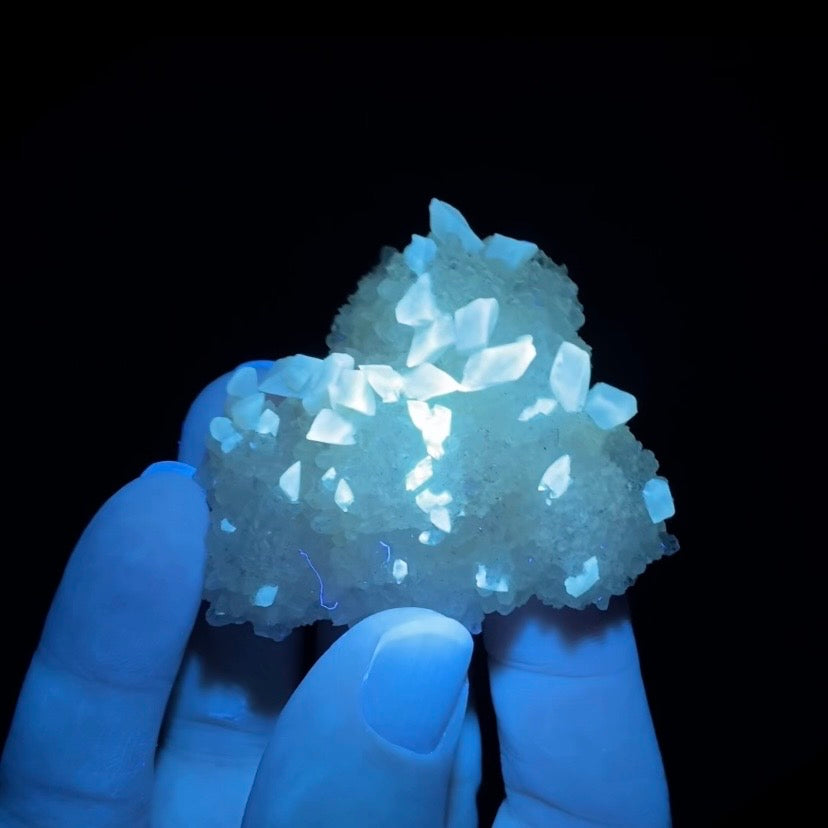
Longwave UV (365 nm):
Strong, cyan to aqua fluorescence across the calcite crystals.
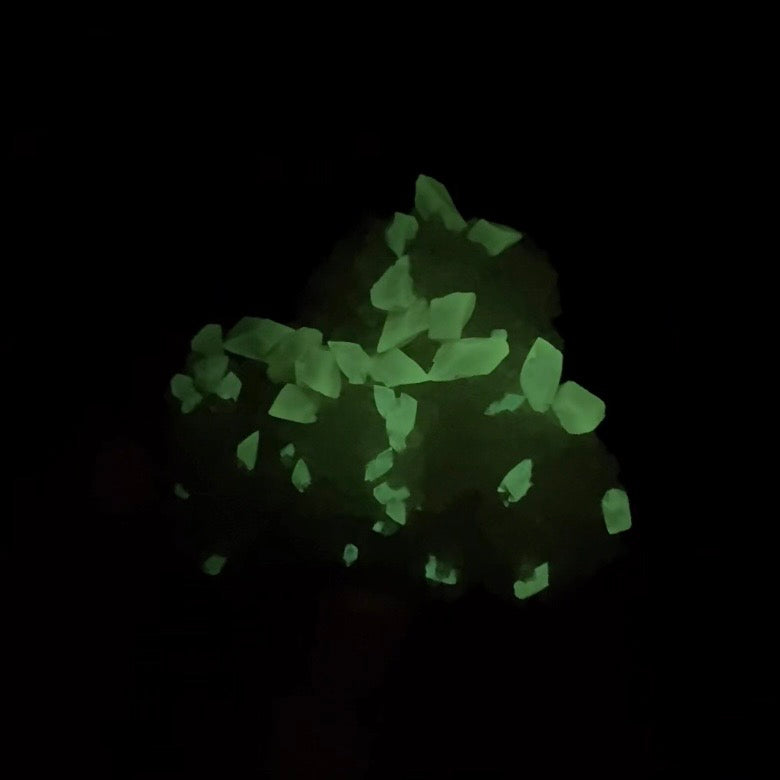
Phosphorescence:
A faint greenish afterglow is visible after UV exposure, somewhat more pronounced following shortwave illumination.
That color mix — cyan fluorescence with greener afterglow - is consistent with Mn-activated calcite with minor secondary activators and
trace Pb or rare earth elements (not uncommon in Deccan Trap cavity calcites)
Jalgaon District, Maharashtra, India (Deccan Traps).